How Nourish Builds a Menu from Three East End Houses (and a Long Drive)
Nourish by The Roundtree Staff
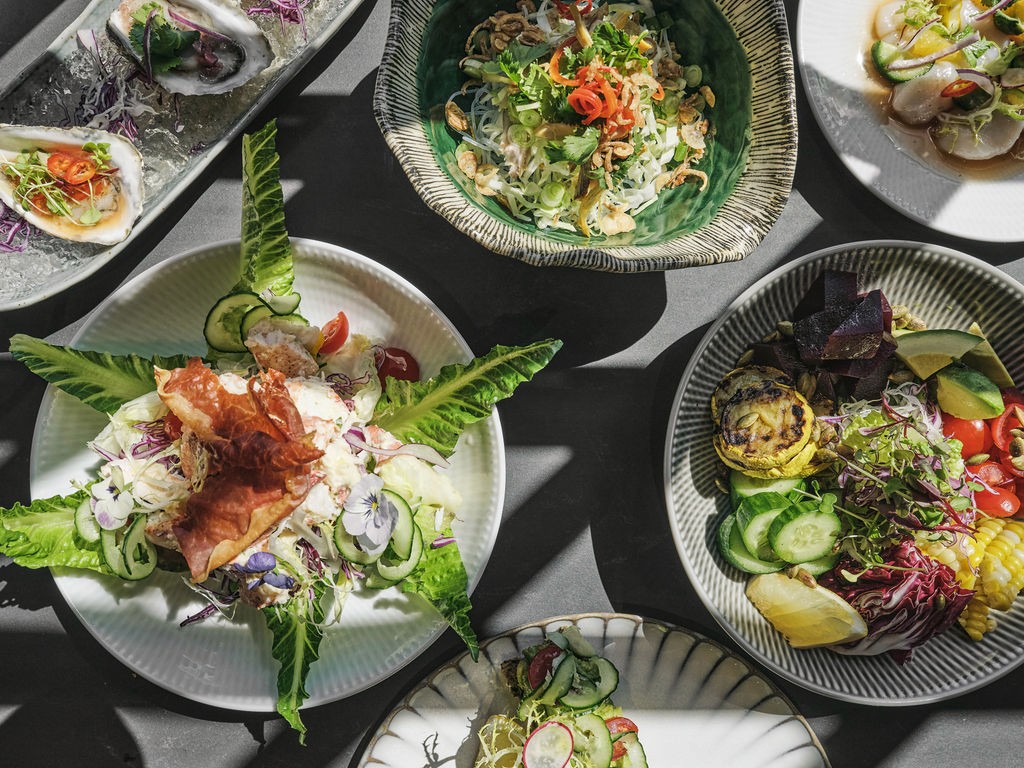
Chef Dewa Wijaya keeps a list pinned in the kitchen at Nourish. It is not a recipe. It is a phone tree.
At the top, the stand at Balsam Farms in Amagansett. Then the dock at Gosman’s in Montauk. Then the market at Milk Pail in Water Mill. The list is short. It is, more or less, the menu.
A great Hamptons farm-to-table restaurant in 2026 is not a kitchen first. It is a sourcing list first. The kitchen is what happens after the sourcing is right. That is the rhythm at Nourish.
Balsam Farms, Amagansett, NY
Balsam Farms is the family farm in Amagansett, and it is the place a lot of East End chefs learn the season from.
The corn gets the headlines. Balsam Farm sweet corn, in the high weeks of August, is what corn is supposed to taste like. Sugar-snap sweet, the kernels still tasting of milk, gone within a few hours of being picked. But it is the rest of the stand that tells the truth about Balsam: tomatoes in five colors and weights, garlic in July, summer squash that has been in the ground long enough to mean it, micro herbs cut to order.
A Balsam day is the kind of day a chef plans the rest of the menu around.
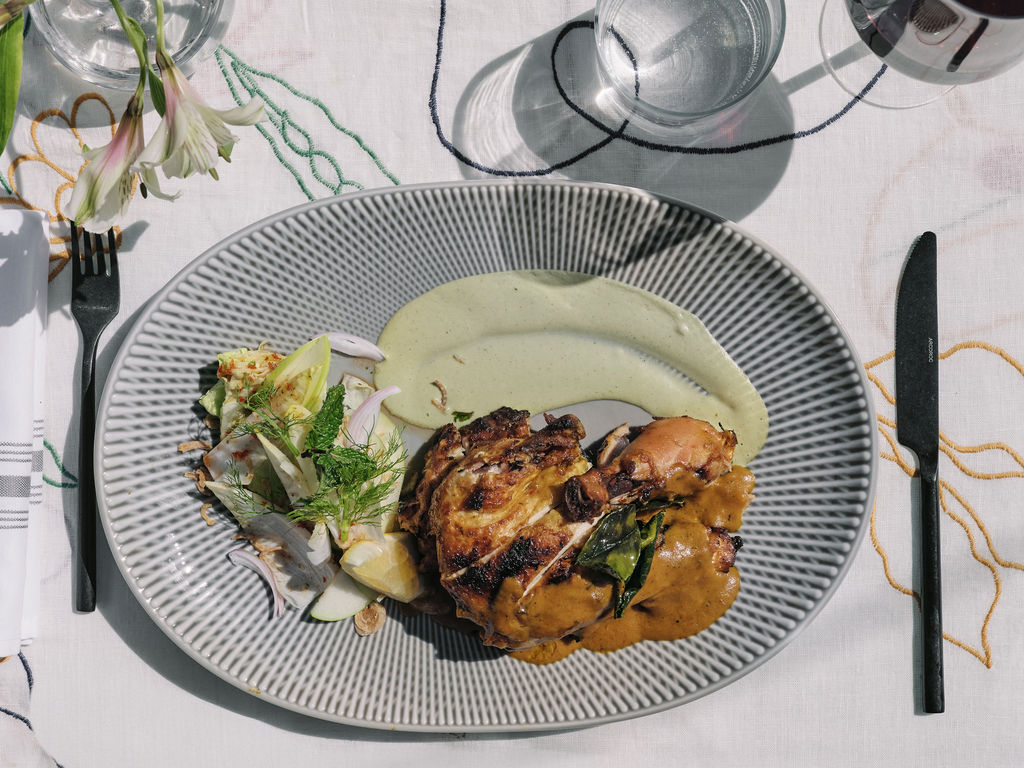
You will see Balsam show up across the Nourish menu in small, defining ways. The sweet corn on the flame-grilled prawn. The basil cut over the chilled corn soup. The tomato and cucumber that sit, mid-summer, against whatever the catch was that morning. Chef Dewa’s preparations are deliberately quiet on Balsam’s ingredients, because Balsam’s ingredients do not need a lot of help.
Gosman’s Dock, Montauk, NY
Drive east on Route 27 long enough and you will eventually run out of Hamptons. You will hit Montauk. Past the docks, past the morning boats, there is a fish house called Gosman’s that has been running since the 1940s. It is a seafood source for a long list of East End restaurants, and it is the seafood source for Nourish.
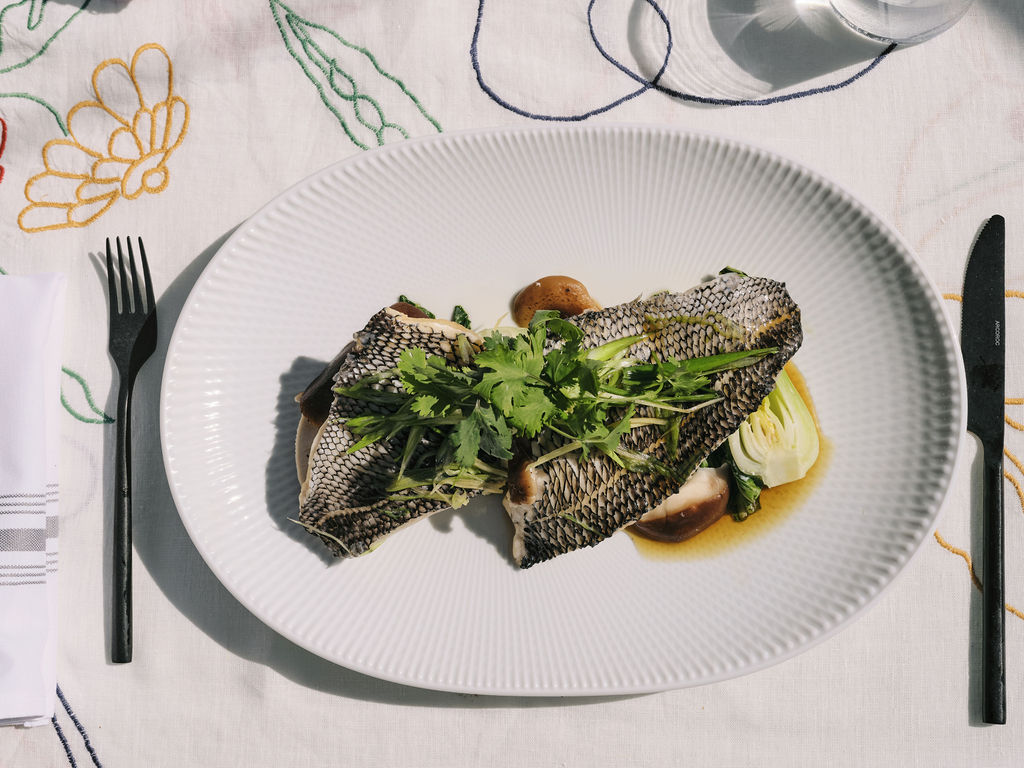
Some of the menu shifts week to week based on what the Gosman’s box looks like. The branzino is a fixture: salt-baked, served whole, the skin cracked open at the table to release a column of herb-perfumed steam. Other days it is a piece of fluke. Other days it is a local sea bass that gets steamed with ginger, shiitake, bok choy, and red rice. On the right morning, the lobster that arrives is the one that ends up in the Nourish Lobster Roll the next day.
The lobster roll itself deserves a longer story, coming later in the season, but the through-line is the catch. The fish is local. The fish is fresh. The fish is what shapes the day’s menu, not the other way around.
Milk Pail Fresh Market, Water Mill, NY
Milk Pail is the orchard a lot of people drive past for years before they walk in. The Halsey family has been growing on the East End for generations, and the orchard sits just off Route 27 in Water Mill. In late summer the market opens for the fruit run that goes into November: apples, pears, peaches when the season cooperates, raspberries when they hit.
At Nourish, the Milk Pail name appears on the menu most visibly in the apple salad that comes with the salt-baked branzino. The apples are sliced thin, dressed simply, and used as the bright counter-note against the rich fish. It is the kind of small move that defines the difference between a wellness-forward kitchen and a heavy one.
In the fall, when the apple season really opens up, expect Milk Pail to spread further across the menu: sides, desserts, the bar, possibly some quiet experiments by Chef Dewa with house-made kombucha.
On the lunch menu: Acabonac Farms
Beef on the Nourish lunch menu comes from Acabonac Farms in [Cutchogue, on the North Fork]. The farm raises Black Angus and Belted Galloway on rotated pasture grown out of the salt-tinged soil of Eastern Long Island, and the result is grass-fed beef with a more mineral, more grassy character than anything that comes off a commercial line. At Nourish, Acabonac shows up most directly as the lunch burger special, the dish that tells you what Hamptons beef is actually supposed to taste like.
What “farm to table” actually means in the Hamptons
“Farm to table” gets used so loosely that for a lot of guests it has stopped meaning anything. Fair enough.
At Nourish, here is what it means in practice. The menu changes when the season changes, which on the East End is fast. June is not July is not August. Out-of-season produce does not get airfreighted in to keep a dish on the menu. If the season is over, the dish is over. The kitchen plans for that, and so does Chef Dewa.
The math is simpler than it sounds. A Hamptons seasonal restaurant that takes its supply chain seriously is, by definition, a restaurant of about five months. May through late September. That is the window. Nourish is built around it. The menu starts where the farms start, and it ends where they end.
If you have eaten on the East End for any number of summers, you already know which dish on a given menu is real and which is a description. You can taste it.
At Nourish, that question will be answered before the food hits the table, by the list pinned in the kitchen.