Chef Dewa’s Ribeye: The Rest, the Sear, and the Grass-Fed Difference
Nourish by The Roundtree Staff

A good ribeye is not complicated. It is patient.
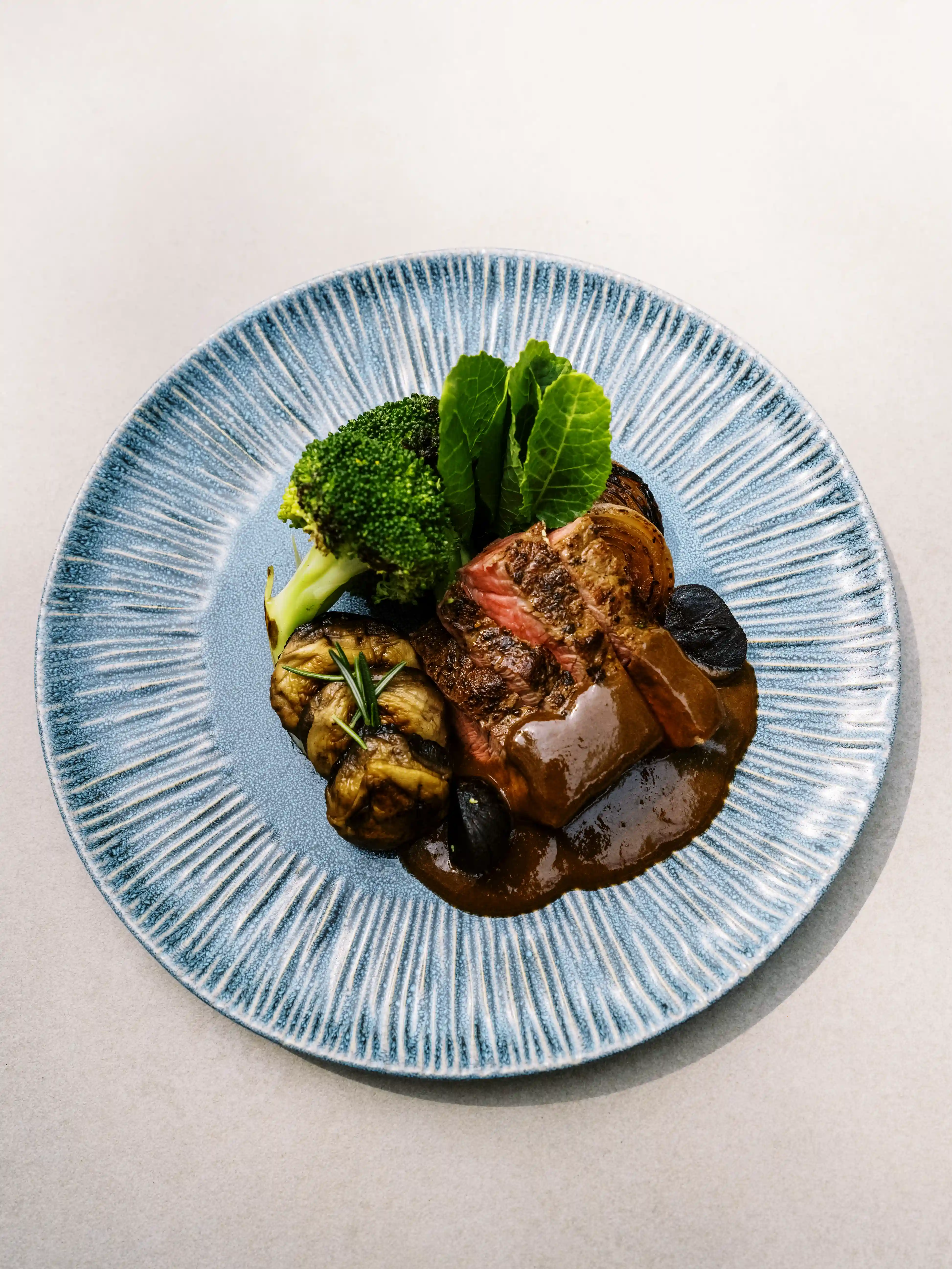
Chef Dewa Wijaya’s 20oz Grilled Ribeye Steak is one of the anchor dishes on the Nourish dinner menu. A bone-in, grass-fed-and-grain-fattened cut served with an onion, mushroom, and baby arugula salad and a black garlic sauce, it is a dish built around a single piece of beef prepared correctly. The sourcing is specific, the preparation is deliberate, and the result at the table does not need much else.
The beef
Nourish’s 20oz ribeye is a bone-in cut, 100 percent grass-fed and then grain-fattened. That combination is the point. The grass-fed start gives the beef a more direct flavor and a fat that finishes cleaner than most of what reaches a standard steakhouse; the grain-fattening builds the marbling that lets a ribeye take an open flame and come back richer for it.
Sourcing runs through the whole Nourish kitchen. Acabonac Farms, the 100 percent grass-fed operation on Long Island, supplies the beef for the Nourish burger. The ribeye is its own cut — grass-fed and grain-fattened — chosen for how it takes the grill.
For Chef Dewa, the sourcing is the first decision in the preparation. Understanding how to cook a ribeye steak well starts with knowing what the cut actually is. A grass-fed, grain-fattened ribeye carries the cleaner flavor of grass-fed beef with enough fat to hold up to high heat, and it behaves differently on the grill than a generic grain-fed cut. The preparation is built around what the beef actually is, not around what a standard ribeye recipe calls for. At 20oz, a bone-in ribeye steak holds enough mass to absorb the heat of a grill and still arrive at the table with a properly developed crust and an interior that has not overcooked.
The rest
Chef Dewa’s ribeye preparation begins before any heat is applied.
A cold steak placed on a hot grill cooks unevenly. The exterior reaches temperature and develops color while the interior is still catching up. By the time the center arrives where it needs to be, the outer layer has gone further than intended. The steak rests at room temperature before it goes near heat, long enough for the internal temperature to rise so the cook happens more evenly from edge to center.
This is the step most home cooking skips. It is also the step that determines more of the outcome than the sear does. A 20oz ribeye holds a significant thermal mass; the rest matters more at this size than it would on a thinner cut.
The grill
The ribeye goes over a grill at high heat, with enough contact time to build the crust the dish depends on. Open flame produces a char that a flat surface cannot replicate, and the fat in a grass-fed ribeye responds differently to that kind of direct heat than it would to a pan. The exterior chars and colors. The interior, rested and closer to temperature already, arrives without overcooking.
Chef Dewa reads the beef by touch rather than the clock, adjusting for the thickness of each cut.
The second rest
After the grill, the steak rests again. This is the step that most guests eating a properly cooked ribeye are actually tasting, without knowing it.
The muscle fibers in a cooked steak are tensed from the heat. Given time to relax, they redistribute the juices forced toward the center during cooking back through the meat. A ribeye cut immediately off the grill loses those juices to the board. A ribeye rested properly retains them. The difference shows up in every bite: one is dry toward the edges, the other is not.
On the plate
The 20oz grilled ribeye arrives with an onion, mushroom, and baby arugula salad and a black garlic sauce.
The arugula brings freshness and a mild bitterness against the richness of the beef. The onion and mushroom add earthiness alongside the char from the grill. The black garlic sauce is the most considered element: aged until its sharpness converts to something deeper and almost sweet, it amplifies the beef rather than covering it.
Nothing on the plate is there by accident. The ribeye is a direct expression of what the Nourish kitchen does: classical French training, instincts shaped by Bali, ingredients sourced from the East End. Each component earns its place. It is a dish that looks simple and is anything but.

About Nourish
Nourish is a standalone restaurant at 203 Bridgehampton-Sag Harbor Turnpike in Bridgehampton, operated by The Roundtree, a boutique hotel in Amagansett. The two properties are separate locations; guests of The Roundtree have priority access to reservations. The restaurant seats 120 across a 70-seat dining room, a 20-seat bar, and a 30-seat outdoor garden.
Chef Dewa Wijaya was born in Bali and trained in the classical French tradition. He spent more than two decades as executive chef at COMO Hotels properties, including COMO Shambhala Estate in Bali and COMO Parrot Cay in the Turks and Caicos, building a career in ingredient-driven, wellness-forward cooking long before either of those terms became common in hospitality.
Visit Nourish
Location
203 Bridgehampton-Sag Harbor Turnpike, Bridgehampton, NY
Hours
May, June, July & August: Dinner nightly
September: Dinner Thursday to Sunday
Reservations
Resy · (631) 600-8852