She Ate Twenty-One Consecutive Meals by the Same Chef in Bali. A Year Later, He Moved to the Hamptons
Nourish by The Roundtree Staff
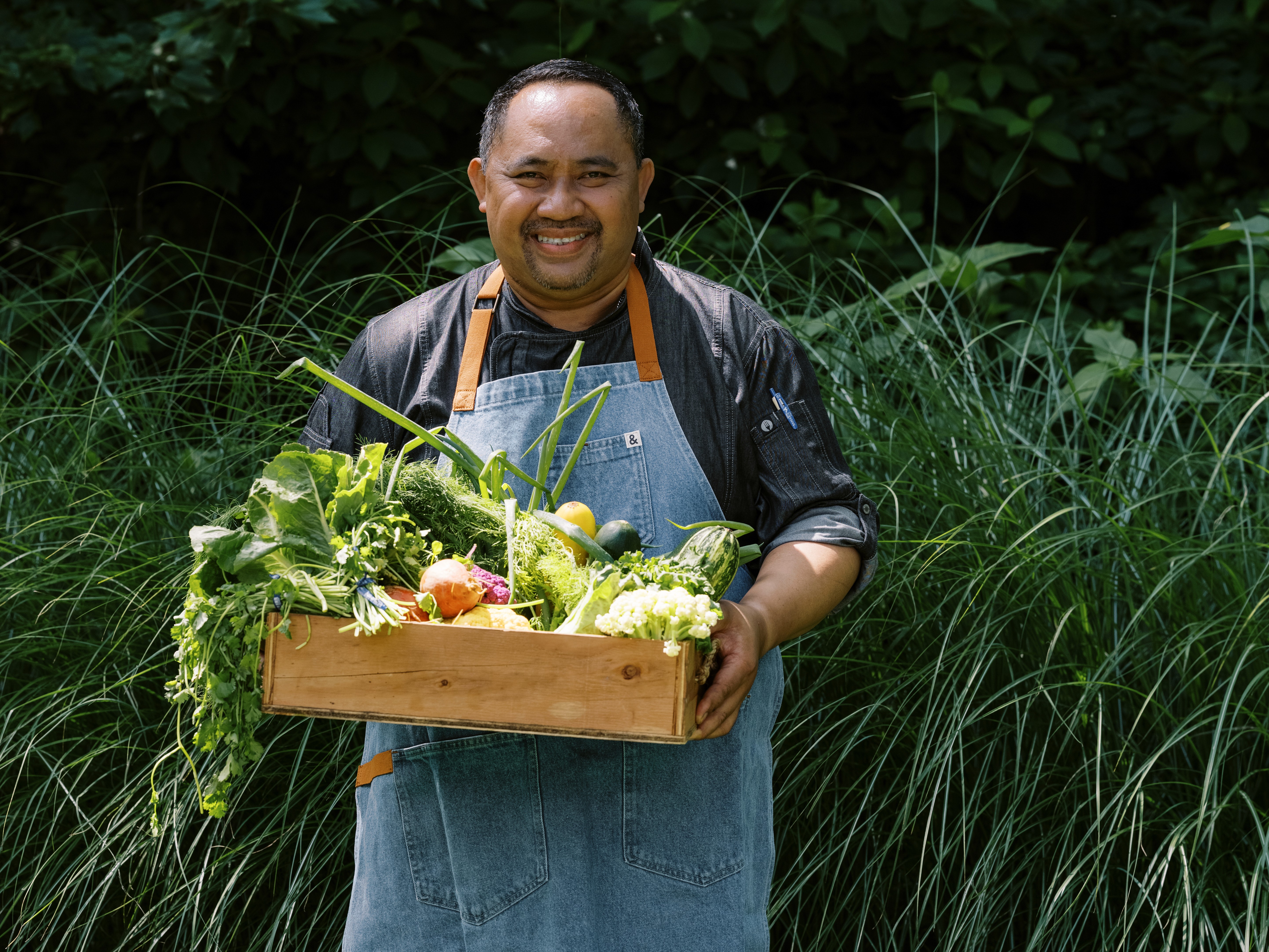
The story usually goes that a chef arrives somewhere, and a hotel hires him. The Nourish story went the other direction.
In the winter of 2024, Sylvia Wong, founder of The Roundtree, Amagansett, checked into COMO Shambhala Estate, the wellness retreat hidden in the jungle outside Ubud, for a two-week stay. By the end of it, she had eaten twenty-one consecutive meals cooked by the same chef.
When she flew back to the East End, she carried his name with her.
That chef was Dewa Wijaya. A year later, he moved to Amagansett.
Bali roots, French training
Chef Dewa was born in Bali, raised among rice fields, banana groves, and the kind of fragrant, deeply local cooking that shapes a person before they realize it is shaping them. His earliest food memories are not of restaurants. They are of his grandmother. Spice pastes ground by hand against stone. Small fish wrapped in banana leaves and grilled over open flame. Cooking that belonged completely to the place it came from.
He could have stayed close to that tradition. Instead, he took the long way around.
In his twenties, he trained in classical French technique, the demanding, repetitive discipline that defines young cooks long before anyone knows their name. Mother sauces. Knife work. Endless reductions. The unglamorous mechanics of precision.
Anyone who has come through that kind of kitchen will tell you the same thing: French training does not flatten a chef’s instincts. It sharpens them. It teaches restraint. It teaches timing. It teaches you when to stop.
Today, those two influences still guide the way he cooks: the vibrant balance of Balinese flavor, and the French respect for technique that lets an ingredient speak before the chef does.
Twenty-plus years inside the luxury wellness world
Most of Chef Dewa’s career was spent inside COMO Hotels and Resorts, the quietly influential luxury hospitality group behind some of the world’s most respected wellness properties.
Long before “wellness-forward dining” became a hospitality trend, Chef Dewa had already spent decades refining it.
He led the kitchen at COMO Shambhala Estate in Bali, where Sylvia first encountered his cooking. He cooked through years of seasons at COMO Parrot Cay in Turks and Caicos, where produce arrives by boat and a chef learns quickly how to make ingredients stretch without ever feeling compromised. He worked across COMO properties in Bali, the Caribbean, and beyond, slowly building a style of cooking the wellness world recognized years before the broader dining world caught up to it.
Not spa food. Not restriction.
Something more difficult to achieve.
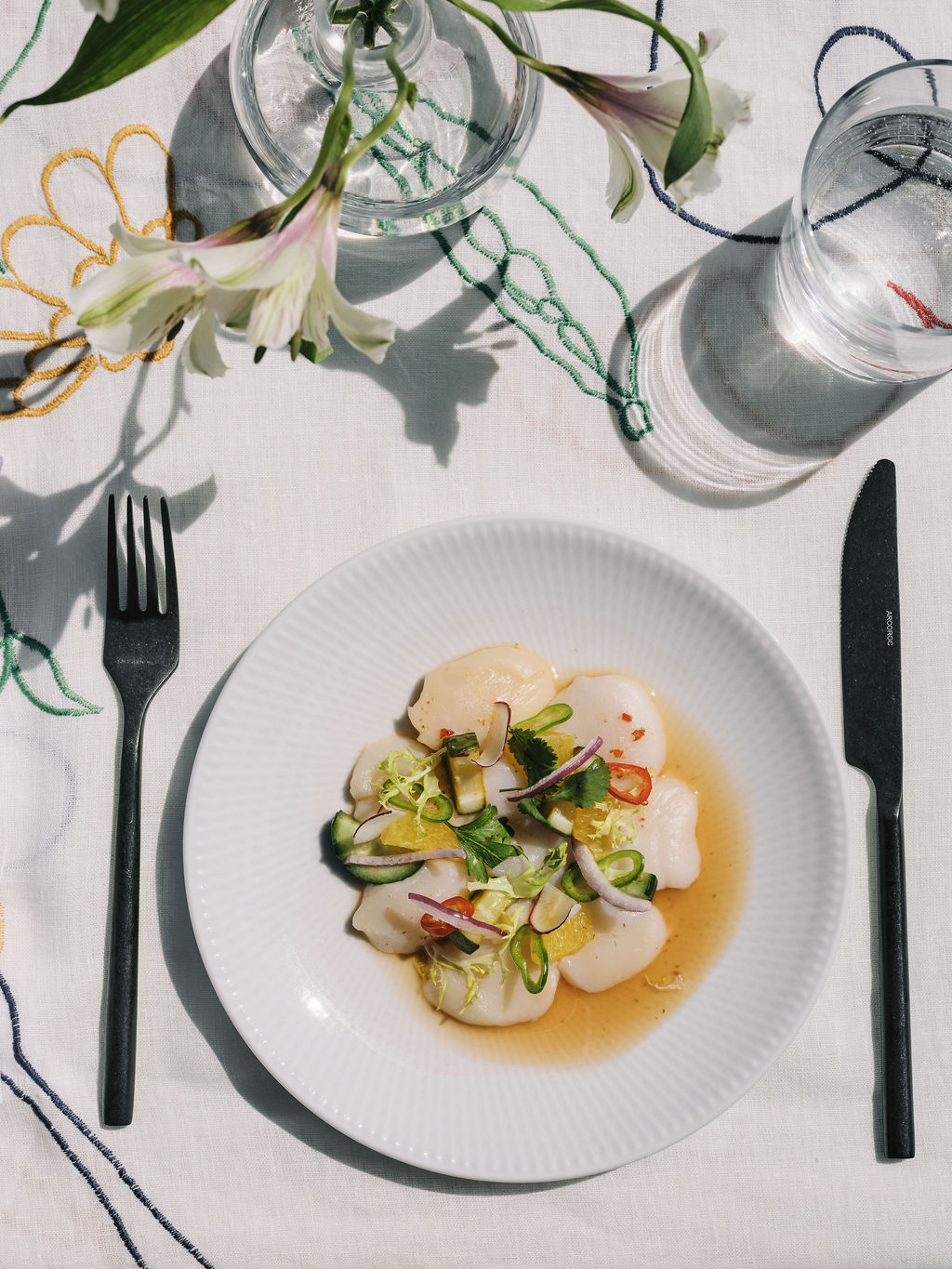
Food that feels luxurious without feeling heavy. Cleaner oils. Less butter, more precision. Vegetables treated with the same care most restaurants reserve for prime cuts of meat. Fish cooked just enough. Sauces built quietly instead of aggressively.
He likes a good piece of meat. He likes a properly cured fish. He simply does not bury them.
This is the philosophy he describes, plainly, as wellness-forward cooking. Other chefs discovered it during the 2010s. He has been refining it for more than twenty years.
The year quietly spent in Amagansett
In the summer of 2025, Chef Dewa moved to the East End to become the first chef-in-residence at The Roundtree, Amagansett.
On paper, the role sounded straightforward: cook for hotel guests.
What happened instead is the reason Nourish now exists.
Guests who booked one-night stays started extending them into weekends. Couples who planned dinner reservations in town began canceling them and eating at the hotel instead. Some guests started organizing entire days around the meals he was serving.
The food became difficult to leave.
Over the course of that year, Chef Dewa learned the East End the way only working chefs do: through the back entrances of farms, fish houses, and markets before sunrise.
He learned the cuts at Acabonac Farms. He learned when the first Balsam Farms and Amber Waves tomatoes hit. He learned which morning Gosman’s had the best local catch. He learned the apples at Milk Pail Fresh Market before they ever reached a menu.
A year spent inside the pantry of the Hamptons.
That is what he brought to Bridgehampton.
Nourish, in his own words
Ask Chef Dewa to describe the food at Nourish, and he will not begin with technique or cuisine. He starts with ingredients.
“The inspiration begins with the extraordinary ingredients of the East End. The farms, the waters, and the people who cultivate them provide a natural foundation for cooking that feels both vibrant and nourishing.”
Chef Dewa Wijaya
The menu reflects that philosophy.
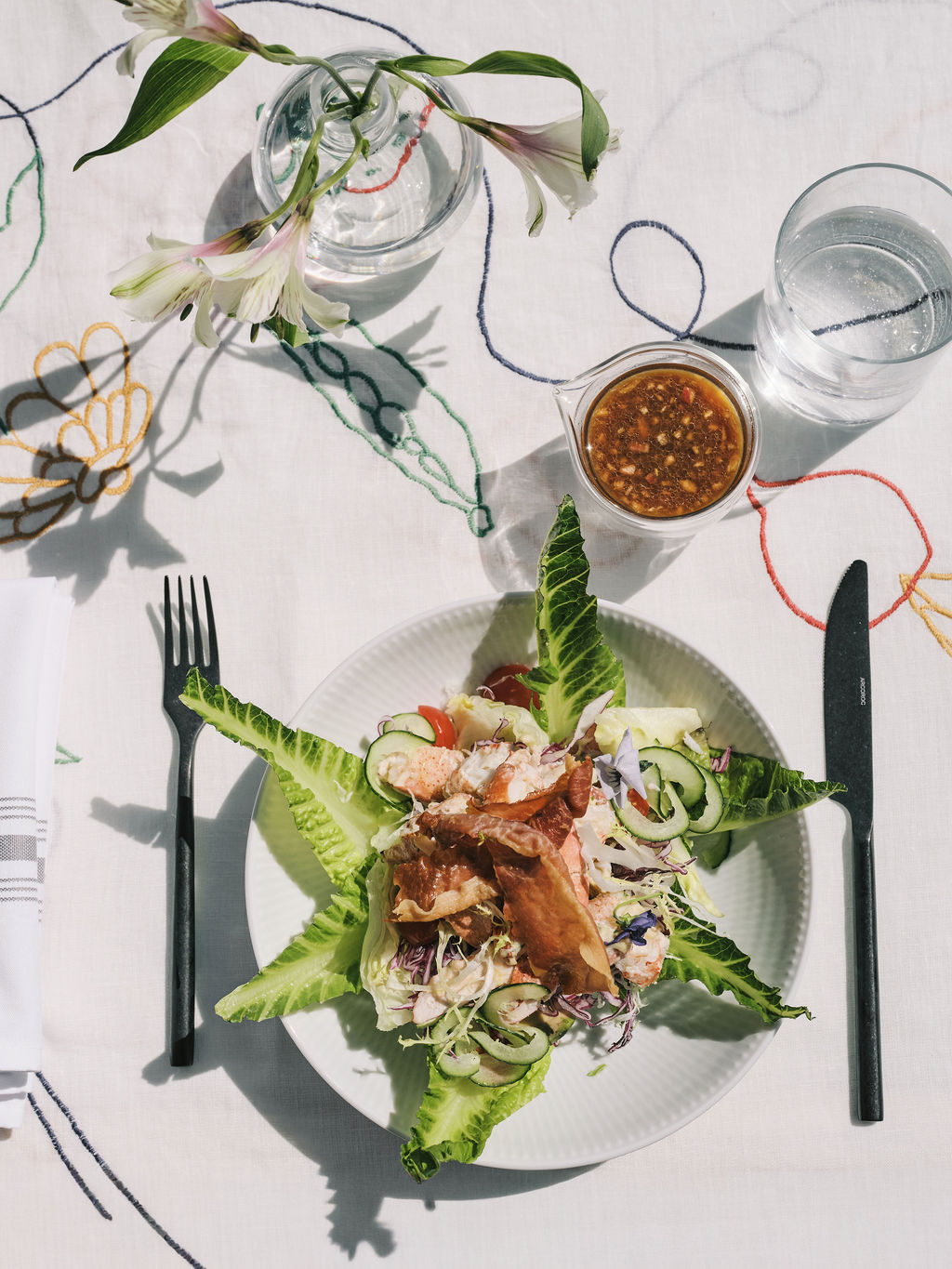
There is an East End lobster roll reimagined with macadamia sour cream and furikake,. A flame-grilled jumbo prawn layered with chickpea-carrot purée, Balsam Farm sweet corn, pickled shallots, and toasted almonds. A slow-cooked beef short rib in a curry sauce so delicately built you can taste each ingredient separately instead of all at once.
Nothing on the menu feels loud. Nothing reaches too hard for attention.
The food simply earns it.
And that may be the clearest expression of Nourish itself.
This is not performance dining. It is not designed around spectacle or volume or reservation theater. It feels designed for exhale moments. Long dinners that drift into another bottle of wine. Salt still in the air after the beach. Conversations that stretch late without anyone noticing the hour.
The kind of restaurant people return to before they fully understand why.
Why Bridgehampton
Nourish opens Monday, May 18, 2026, at 203 Bridgehampton-Sag Harbor Turnpike in a 120-seat space built around three distinct settings: a main dining room, a 20-seat bar, and a 30-seat outdoor garden designed to run as long as the East End weather allows.
The cocktail program is being developed by Takuma Watanabe of Martiny’s in New York. The kitchen belongs to Chef Dewa.
If you have spent enough summers eating in the Hamptons, you know the familiar places.
Nourish is trying to be something quieter.
A Hamptons restaurant shaped more by farms than trend cycles. A restaurant that trusts local sea bass to speak for itself. A restaurant that treats guests the way great hotels treat guests: attentively, generously, and without hurry.
In other words, the kind of restaurant Sylvia Wong walked into in Bali.
Three years later, on a different coastline, with the East End behind it.
Twenty-one meals turned into one.