What the Mediterranean Diet and the East End Have in Common (And What It Means for How You Eat This Summer)
Nourish by The Roundtree Staff
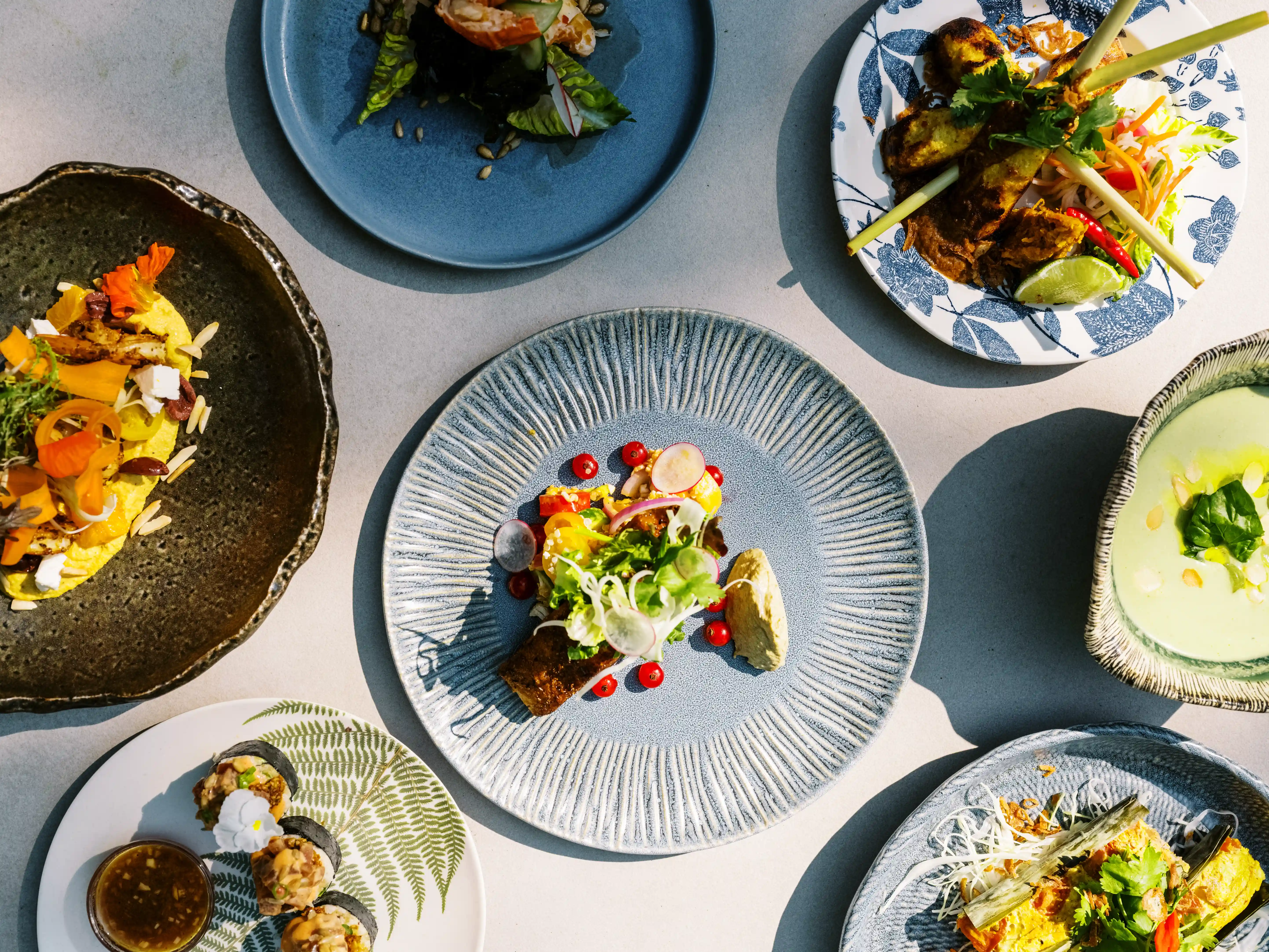
The Mediterranean diet is not a place. It is a pattern.
Olive oil, fresh fish, vegetables picked close to the source, legumes, minimal processing. The research behind it is among the most replicated in nutrition science. Dr. Albert Chan, in Happy Longevity and in his clinical work, returns to it consistently as the closest thing to a consensus longevity diet the evidence supports.
It also describes, more closely than most people realize, what is on the menu at Nourish right now.
The overlap is not a coincidence
The East End of Long Island has a different history from the Mediterranean coast, but the same logic applies to both. Proximity to the water means fresh fish is the default protein. A short growing season with high summer intensity produces vegetables that arrive at the table quickly after harvest. The local ingredients are, structurally, the same ones linked to long healthy lives in Greek, Italian, and Spanish populations for generations.
Chef Dewa Wijaya's training adds another layer. His years at COMO Shambhala built habits around cooking that preserves nutritional integrity rather than obscuring it. His Balinese background draws on a food culture built around plants, aromatics, and freshwater fish. His French technique teaches precision with fat. The result is a kitchen where the core mediterranean diet principle—quality ingredients, handled well, not overworked—is the operating logic even when the dishes themselves are not traditionally Mediterranean. This is what Dr. Chan calls East meets West: combining diets from different regions widens the sources of healthy food rather than narrowing them.
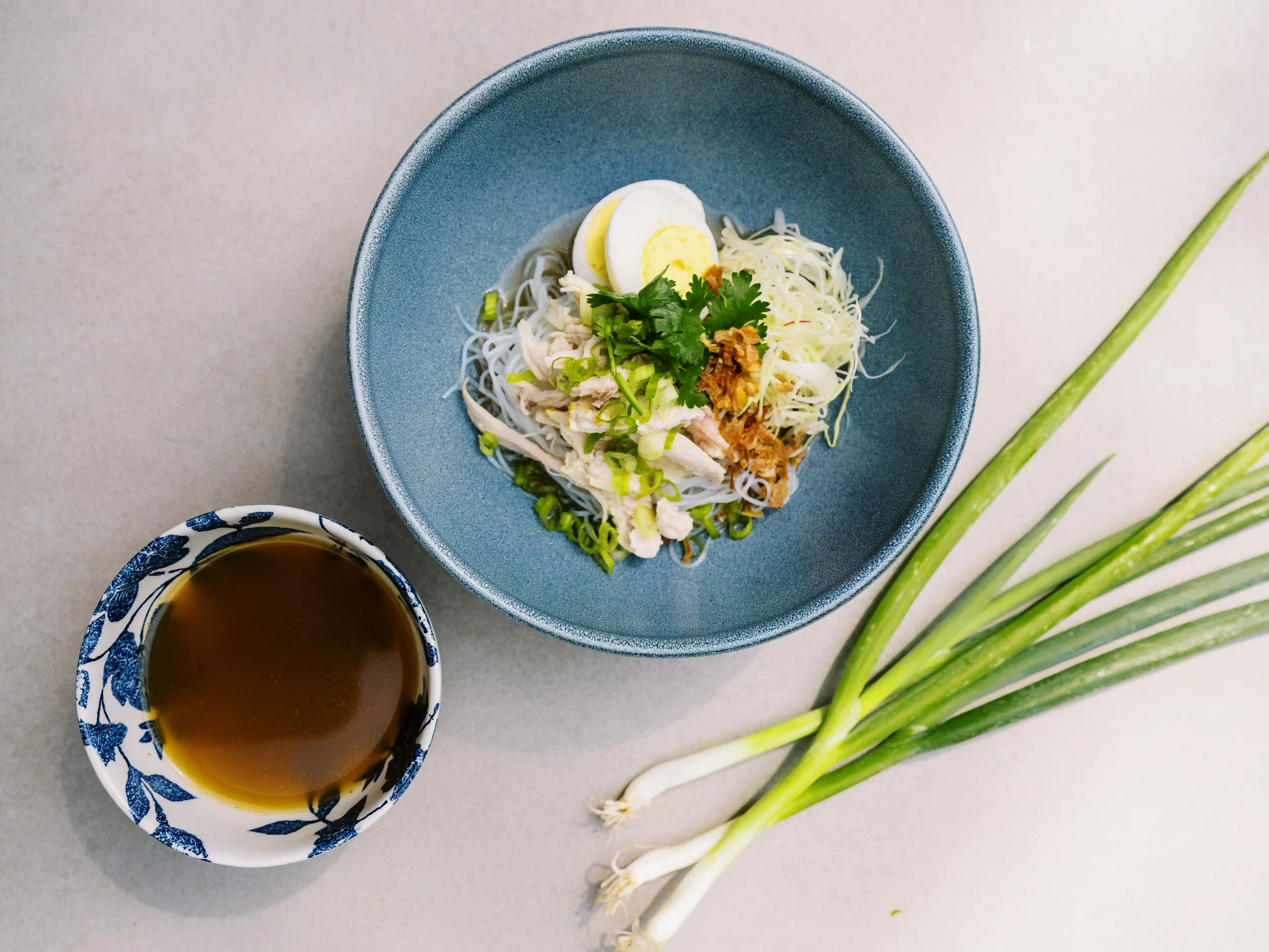
What Dr. Chan looks for: the mediterranean diet and heart health
Dr. Chan is specific about what the research actually shows. The mediterranean diet benefits are not about any single food. They come from a consistent pattern: high intake of monounsaturated fats; regular consumption of fatty fish; abundant vegetables; limited refined carbohydrates and processed seed oils; moderate protein from quality sources.
That pattern is consistently associated with measurable outcomes. Lower cardiovascular risk. Reduced inflammation markers. Better cognitive function in aging populations. It holds across cultures that share the dietary pattern without sharing geography, ethnicity, or other variables.
It is also not the only pattern the evidence supports. Dr. Chan points to the DASH diet, the heart-healthy eating plan most cardiologists recommend for its limits on sodium, saturated fat, and simple sugars, as working from the same playbook. The two most-studied heart-healthy diets in medicine arrive at the same place: whole ingredients, good fats, minimal processing. The label matters less than the pattern.
Inflammation is where Dr. Chan sees the longevity research heading next. The foods that drive it up are ultra-processed foods, saturated fat, and simple sugars. The foods that push back are the ones already running through this post: fatty fish, leafy greens, berries, extra-virgin olive oil, nuts, and spices like turmeric and ginger.
What makes the East End relevant is sourcing. Mediterranean diet heart health benefits are tied in part to food quality: fish caught close to shore and eaten the same day, oil that has not been adulterated, vegetables that have not spent a week in transit. Those conditions are hard to replicate in most American restaurants. They are not hard to replicate here.

How it shows up on the plate at Nourish
The Nourish menu does not use the word Mediterranean. It does not need to.
The steamed Montauk sea bass with ginger, shiitake, bok choy, and red rice covers the fatty fish requirement with local fish that arrived that morning. The macadamia nut oil on the lobster roll replaces refined seed oil with a fat whose oleic acid profile is comparable to extra-virgin olive oil, one of the less obvious macadamia nut oil benefits on the plate. The vegetable-forward dishes reflect a kitchen that treats produce as a primary component, not a side.
Chef Dewa is not cooking a Mediterranean menu. He is cooking from the same set of principles that the best diet for longevity is built on. The ingredients are different. The logic is the same.
Dr. Chan's role in this collaboration is to make that logic visible. His standard for the perfect diet is simple: it should be delicious and enjoyable, with benefits grounded in evidence-based medicine. Most people eating at Nourish are eating well by the standards of the longevity research without knowing it. The Wellness Series exists to close that gap.
Why summer on the East End is the right time
The Mediterranean diet works, in part, because it is seasonal. The populations that follow it most closely are eating what is available locally and fresh. In summer, that means fish, tomatoes, greens, and legumes. The processed alternatives are not as present because the fresh ones are.
Summer on the East End produces the same conditions. The Montauk fishing boats are running. The farm stands are open. The longevity foods on the Nourish menu in June and July are the same ones Dr. Chan recommends year-round. The timing is not incidental. This is when the overlap between the two tables is at its most direct.
The Wellness Series
This is the second post in the Nourish Wellness Series, a recurring collaboration with Dr. Albert Chan running across the 2026 season. Each entry brings his perspective to a specific point where the science of eating well meets summer on the East End.
The first post covered how Dr. Chan's longevity diet framework aligns with the way Chef Dewa sources and cooks. This one gets into the structural reasons why. The East End is not the Mediterranean. But on a good summer evening, eating at Nourish, the distance between them is shorter than you might expect.