What a Cardiologist Says About Eating Fish This Summer
Nourish by The Roundtree Staff
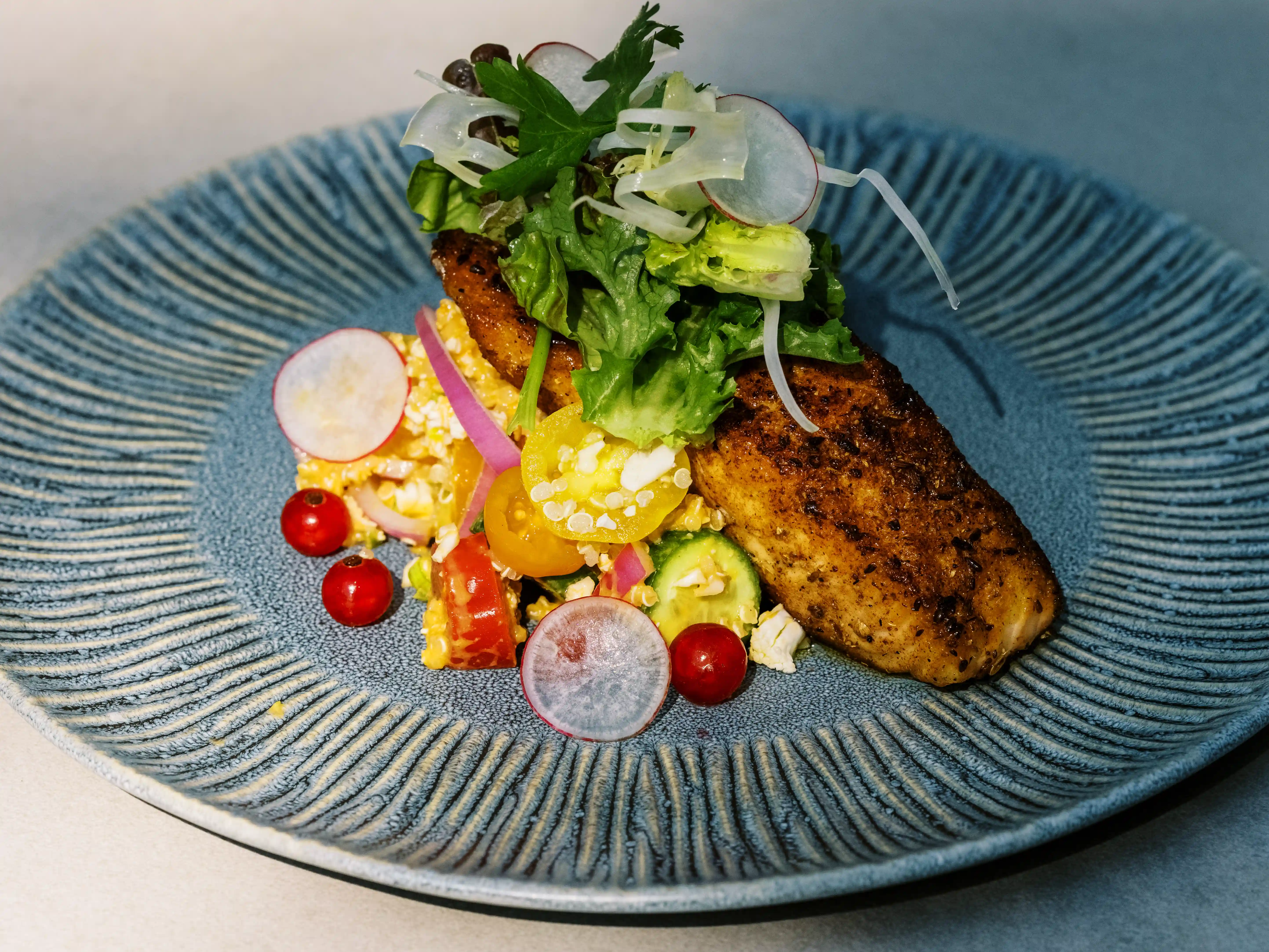
Dr. Albert Chan has a short answer to the question of what a cardiologist wants people to eat more of.
Seafood. Specifically, fish that has been caught wild, handled well, and prepared without obscuring it.
This is not a complicated position. The evidence behind it is extensive, consistent across decades of research, and has not shifted in any meaningful way as nutrition science has evolved. What has changed is how rarely restaurants actually act on it.
What the research says about fatty fish
The relationship between regular fish consumption and cardiovascular health is among the most studied associations in nutrition medicine. Fatty fish in particular, the kinds rich in omega-3 fatty acids, EPA and DHA specifically, have been shown across large population studies to reduce triglycerides, lower resting blood pressure, and decrease markers of systemic inflammation.
Dr. Chan's work in Happy Longevity places this within a broader framework: the foods most consistently linked to long, healthy lives are the ones that appear most frequently in the diets of populations that live longest. Fish is always on that list. It appears in the traditional diets of Okinawans, Sardinians, and Greeks, three of the populations studied most closely for longevity, not as an occasional indulgence but as a regular protein source that replaced less favorable alternatives. It is also why, in the longevity data Dr. Chan cites, pescatarian eating patterns consistently perform at or above fully plant-based ones. Keeping fish on the plate, in his reading of the evidence, is the single most useful addition to an otherwise plant-forward diet.
The mechanism matters here. Fatty fish displaces red meat at the table. It reduces the proportion of saturated fat in a heart healthy diet without reducing protein or satiety. When prepared correctly, meaning without deep frying, heavy cream sauces, or excessive salt, it is also one of the lightest proteins in terms of digestive load. In summer, when appetite runs lighter and the body is already working harder to regulate temperature, that lightness is not a compromise. It is exactly what the meal should be.
The displacement runs in the other direction too. Dr. Chan is blunt about the worst pattern in the modern diet: ultra-processed foods, the mass-produced breads, flavored yogurts, deli meats, and some plant-based meat substitutes that have been linked to higher rates of dementia, heart disease, stroke, metabolic disease, and cancer. They are also among the foods most associated with chronic inflammation, the concept Dr. Chan watches most closely in the current longevity research. Every meal built around fresh fish, leafy greens, and good fats is a meal built around their opposite.

How Chef Dewa approaches it
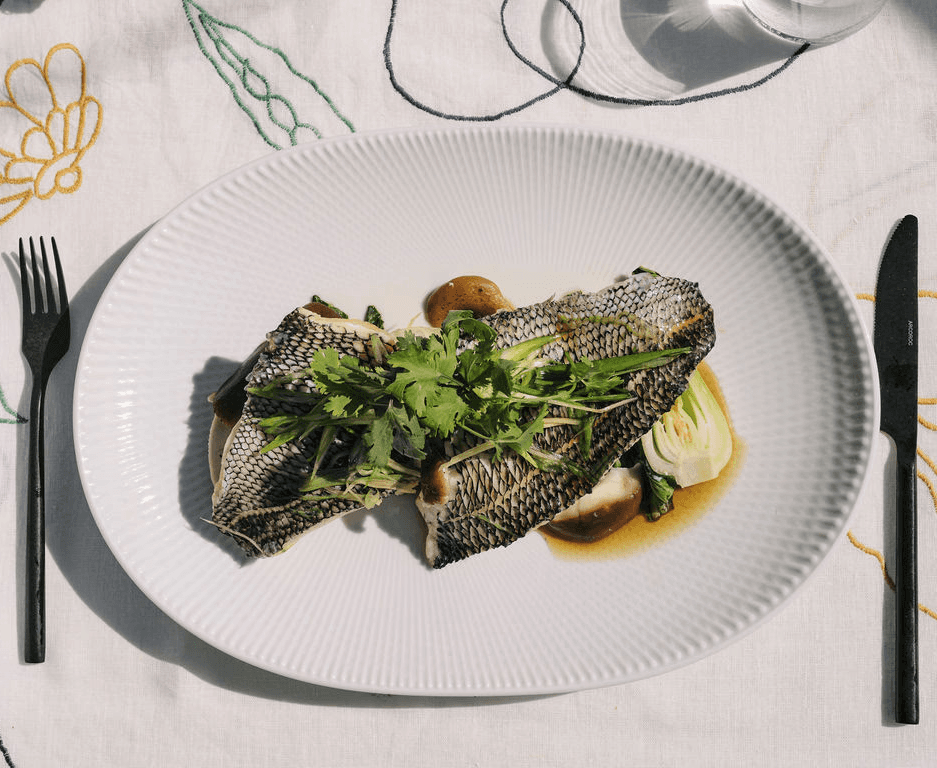
The sea bass at Nourish comes from Montauk. The route from water to kitchen is short by design. Chef Dewa sources through relationships rather than distributors wherever possible, which means the fish that arrives each morning has not sat in a cold chain for three days before it reaches the pan.
The preparation is steamed with ginger, shiitake, bok choy, and red rice. Nothing in that construction is accidental. Ginger is anti-inflammatory, one of the spices Dr. Chan singles out alongside turmeric. Shiitake mushrooms provide B vitamins and compounds associated with immune support. Bok choy adds minerals and hydration. Red rice contributes fiber and a lower glycemic response than white.
Chef Dewa did not build this dish to satisfy a nutritional checklist. He built it because the components work together on the plate: the aromatics lift the fish, the mushrooms add depth, the bok choy brings texture, the red rice holds everything without heaviness. That it also constitutes, in Dr. Chan's framing, close to an ideal meal is not a coincidence. It is what happens when a kitchen understands that good food and healthy food are not in opposition. The dish is also a working example of what Dr. Chan calls East meets West: a Montauk catch prepared with Balinese aromatics, two regional food cultures on one plate, widening the sources of healthy food rather than narrowing them.
The sourcing advantage
Most fish served in American restaurants has traveled a significant distance before it reaches the table. The time between catch and plate matters nutritionally: omega-3 content begins to degrade after harvest, and the oxidation process that affects flavor also affects the fatty acid profile that makes foods high in omega-3 worth eating for health purposes in the first place.
The East End of Long Island is unusual in this regard. Montauk remains one of the most active commercial fishing ports on the Atlantic coast. The proximity of that supply to the kitchens of the Hamptons is an advantage most restaurants in the country cannot replicate, and that most restaurants in the Hamptons do not take full advantage of.
Nourish does. The fish on the menu is not an afterthought or a concession to guests who do not want meat. It is a centerpiece, sourced and prepared with the same attention that goes into every other component on the plate—which is exactly what you would hope for from a Bridgehampton restaurant this close to the boats.
The Wellness Series
This is the third post in the Nourish Wellness Series, a recurring collaboration with Dr. Albert Chan running across the 2026 season. Each entry brings his perspective to a specific point where the science of a heart healthy diet meets summer on the East End.
Earlier posts covered the broader alignment between longevity eating and Chef Dewa's kitchen, and the structural overlap between mediterranean diet benefits and what grows and swims within a few miles of the restaurant. This post looks at the category of food Dr. Chan returns to most consistently when the question is simply: what should I be eating more of?
The answer has not changed. The setting for it, here, is better than most.